Introduction
Technology is generating more data than ever before. Smartphones, smart home devices, connected vehicles, industrial sensors, security cameras, and wearable gadgets continuously collect information that businesses and individuals use to make decisions. As the number of connected devices grows, processing all this information efficiently has become an important challenge.
Cloud computing has played a major role in solving this problem by allowing organizations to store data and run applications on remote servers. However, sending every piece of information to a distant cloud data center can introduce delays, consume network bandwidth, and create challenges for applications that require immediate responses.
This is where edge computing becomes valuable.
Edge computing is a technology approach that processes data closer to the location where it is generated rather than relying entirely on centralized cloud infrastructure. By bringing computing resources closer to connected devices, businesses can reduce delays, improve responsiveness, and manage data more efficiently.
In 2026, edge computing is an important part of the broader technology landscape, particularly as artificial intelligence, the Internet of Things (IoT), connected vehicles, and industrial automation continue to develop.
From smart factories and healthcare monitoring to retail analytics and autonomous systems, edge computing is helping organizations build faster and more responsive digital experiences.
This article explores what edge computing is, how it works, its benefits, practical applications, challenges, and future potential.
What Is Edge Computing?
Edge computing is a distributed computing model in which data processing takes place near the devices, systems, or locations where data is created.
Instead of sending every request to a centralized cloud server, an edge computing system can process selected information locally using devices such as gateways, industrial computers, routers, or dedicated edge servers.
For example, consider a security camera that continuously records activity.
In a traditional cloud-dependent arrangement, the camera might send a large amount of video footage to a remote server for analysis. With edge computing, a capable camera or nearby processing device can analyze the footage locally and send only relevant alerts or selected clips to the cloud.
This reduces the amount of data that needs to travel across the network.
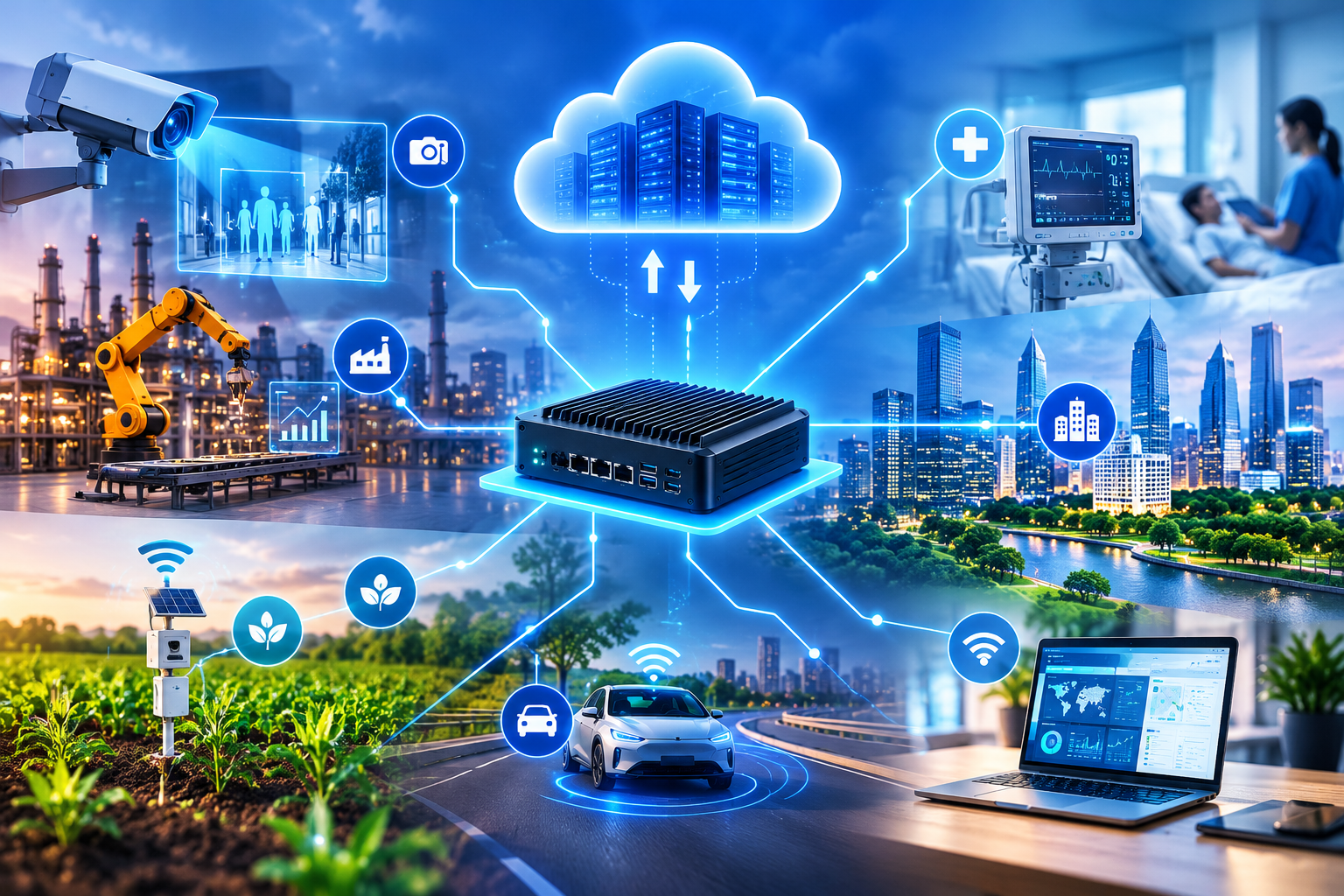
Edge computing does not eliminate cloud computing. Instead, the two approaches often work together. Edge devices handle tasks that benefit from local processing, while cloud infrastructure supports centralized storage, large-scale analytics, software management, and coordination across locations.
The main objective is to place computing resources where they can deliver the best combination of speed, efficiency, reliability, and cost.
How Does Edge Computing Work?
Edge computing typically involves connected devices, local processing infrastructure, communication networks, and centralized cloud services.
1. Data Collection
The process begins when a device collects information.
Examples include a temperature sensor measuring industrial equipment, a camera capturing video, a wearable device recording movement, or a connected vehicle monitoring its surroundings.
The collected information may be generated continuously or in response to specific events.
2. Local Data Processing
The information is transferred to a local processor, edge gateway, or nearby server.
Depending on the application, the system may filter the data, perform calculations, detect unusual patterns, or run an artificial intelligence model.
For instance, a factory sensor might send readings to a nearby edge computer that checks whether a machine is operating outside its normal temperature range.
3. Immediate Response
If the system identifies an event requiring attention, it can respond locally.
A factory monitoring system might trigger an alert, while a smart building controller could adjust ventilation settings according to approved operating rules.
Local processing can reduce dependence on the time required to communicate with a remote cloud service.
4. Selective Cloud Communication
The edge system can send important information to a central cloud platform.
Instead of transmitting every raw data point, it may send summaries, alerts, selected records, or information needed for long-term analysis.
The cloud can then combine data from multiple locations, store historical information, and support centralized management.
5. Continuous Improvement and Management
Edge systems may receive software updates, configuration changes, and updated AI models from a central platform.
This allows organizations to manage distributed infrastructure while keeping certain processing tasks close to the devices.
The exact arrangement depends on the application. Some systems operate mainly at the edge, while others rely heavily on cloud services.
Edge Computing vs. Cloud Computing
Edge computing and cloud computing solve related but different problems.
Cloud computing provides centralized access to computing resources, storage, and services. It is particularly useful for applications that require large amounts of processing power, centralized data management, or coordination across many locations.
Edge computing distributes some of these capabilities closer to data sources.
Processing location: Cloud computing generally processes information in centralized data centers, while edge computing processes selected information near the devices that generate it.
Response time: Edge computing can reduce communication delays for time-sensitive tasks. Cloud systems may introduce additional network latency, depending on the distance and connection quality.
Bandwidth usage: Edge systems can reduce network traffic by filtering or summarizing data locally.
Internet dependence: Some edge applications can continue performing selected functions when their connection to the cloud is interrupted. Their capabilities depend on local infrastructure and configuration.
Computing resources: Cloud data centers generally provide greater centralized computing capacity, while edge devices may have limited processing power, memory, and storage.
Management: Cloud resources can be easier to manage centrally, while edge deployments may involve maintaining many devices across different physical locations.
Neither approach is universally better. Many modern applications combine both models to achieve an appropriate balance.
Major Benefits of Edge Computing
Edge computing offers several advantages for organizations that need responsive, reliable, and efficient technology systems.
1. Reduced Latency
Latency is the delay between sending a request and receiving a response.
For applications such as industrial control, interactive robotics, and certain vehicle systems, even small delays can affect performance.
Processing data locally can reduce the time required to make decisions because information does not always need to travel to a distant data center.
For example, an industrial monitoring system can evaluate sensor readings locally and trigger an immediate alert when a dangerous condition is detected.
However, edge computing does not guarantee a particular response time. Performance still depends on hardware, software, network design, and the complexity of the task.
2. Lower Network Bandwidth Consumption
Connected devices can generate enormous amounts of information.
Streaming all this data to the cloud can increase network usage and associated costs.
Edge computing helps reduce unnecessary data transmission by processing information locally and sending only relevant results to centralized systems.
For example, a network of agricultural sensors might collect frequent measurements but transmit summarized readings and significant changes instead of every raw observation.
This approach can be particularly useful in remote locations with limited connectivity.
3. Improved Reliability
Some applications must continue operating even when internet access becomes unreliable.
An edge system can perform certain functions locally without requiring constant communication with the cloud.
A manufacturing facility, for example, may use local computing resources to maintain monitoring and control functions during a temporary internet outage.
However, offline operation is possible only when the required software, data, and decision-making capabilities are available locally.
Systems that depend on remote authentication, cloud databases, or external services may still lose some functionality.
4. Better Data Privacy
Processing information locally can reduce the amount of sensitive data transmitted to external systems.
A smart camera might analyze footage locally and transmit only an event notification rather than continuously uploading identifiable video.
Similarly, a wearable device could process certain measurements before sharing selected results with a connected application.
Nevertheless, edge computing does not automatically make a system private or secure. Local devices can still be compromised, and transmitted information may remain sensitive.
Organizations must implement appropriate encryption, access controls, secure updates, and data-retention policies.
5. Greater Operational Efficiency
Edge computing can help organizations use network and computing resources more efficiently.
By processing information close to its source, businesses can avoid sending unnecessary data across their networks.
This can improve operational efficiency in environments with many connected devices, including warehouses, factories, hospitals, and transportation systems.
The financial benefits depend on implementation costs, device requirements, maintenance needs, and the amount of network traffic that can actually be reduced.
Important Applications of Edge Computing in 2026
Edge computing supports a growing range of technology applications. Its importance is particularly noticeable in environments where devices generate large volumes of data or need to respond quickly.
1. Edge Computing and Artificial Intelligence
Artificial intelligence often requires significant processing power, particularly when analyzing images, video, audio, and sensor information.
Traditionally, many AI applications have relied on cloud-based processing. Edge AI brings some of these capabilities directly to devices or nearby computing systems.
For example, a smart camera can use an AI model to distinguish between people, vehicles, and ordinary movement without transmitting every frame to the cloud.
An industrial edge computer can analyze machine vibration data to identify patterns associated with potential equipment problems.
A retail device might process shelf images to help detect missing products.
Running AI models locally can reduce latency and network usage. It may also help organizations limit the transmission of sensitive information.
However, edge devices often have limited memory, energy, and processing capacity. AI models may need optimization to run effectively on available hardware.
Cloud computing remains useful for training large models, managing deployments, and analyzing information collected from many devices.
2. Edge Computing in the Internet of Things
The Internet of Things refers to networks of physical devices equipped with sensors, software, and connectivity.
Examples include smart thermostats, industrial sensors, connected appliances, fitness trackers, and environmental monitoring systems.
These devices can generate frequent streams of data, making edge computing useful for processing information locally.
In a smart building, edge systems can analyze temperature, occupancy, and air-quality readings to help manage heating, ventilation, and lighting.
In agriculture, local processing can help monitor soil moisture and environmental conditions.
In manufacturing, edge systems can combine sensor readings to identify unusual equipment behavior.
The result is a more responsive IoT environment that does not need to send every measurement to a remote service before taking action.
3. Edge Computing in Smart Cities
Smart cities use connected technologies to improve transportation, energy management, public infrastructure, and environmental monitoring.
Edge computing can support these applications by processing information near the locations where it is collected.
For example, traffic management systems can analyze information from road sensors and cameras to estimate traffic conditions and adjust signal timing where the system is authorized to do so.
Environmental monitoring stations can analyze air-quality readings locally and transmit alerts when measurements exceed specified thresholds.
Public infrastructure systems can also use edge processing to monitor equipment and identify maintenance requirements.
These applications can improve responsiveness, but they require careful attention to cybersecurity, privacy, system reliability, and public accountability.
4. Edge Computing in Healthcare
Healthcare organizations increasingly use connected medical equipment, remote monitoring systems, and digital health applications.
Edge computing can help process certain types of information close to the equipment or location where it is generated.
For example, a monitoring device may analyze sensor readings locally and generate an alert when a measurement requires attention.
A medical imaging system may use local processing to support image analysis workflows, depending on the approved clinical application.
Local processing can reduce communication delays and limit unnecessary data transfers.
However, healthcare applications involve sensitive information and potentially high-impact decisions. Edge systems must meet applicable privacy, security, clinical validation, and regulatory requirements.
AI-generated recommendations should not be treated as a substitute for appropriate clinical judgment.
5. Edge Computing in Manufacturing
Manufacturing is one of the most practical environments for edge computing because industrial operations often depend on rapid decisions and continuous equipment monitoring.
Machines can generate data about temperature, vibration, pressure, speed, and energy consumption.
An edge computer can analyze these measurements and identify deviations from normal operating conditions.
This supports predictive maintenance, which uses equipment data to help estimate when maintenance may be necessary.
For example, an edge system might detect an unusual vibration pattern and notify technicians before the problem develops into a major equipment failure.
Local processing can also support quality inspection by analyzing images from production lines.
Manufacturers must still test these systems carefully and maintain appropriate safety mechanisms. Edge analytics should not replace certified control systems where dedicated safety systems are required.
6. Edge Computing in Autonomous Vehicles
Connected and autonomous vehicles rely on information from cameras, radar, lidar, and other sensors.
These systems must process information quickly to understand surrounding conditions and support driving decisions.
Sending all sensor data to a remote cloud service before responding would be unsuitable for many immediate driving tasks because network delays and interruptions are unpredictable.
Vehicle computers therefore perform critical processing locally.
Edge computing can also support roadside infrastructure, connected traffic systems, and communication between vehicles and nearby systems.
However, autonomous driving involves complex safety requirements. Vehicle systems must be validated against demanding operational conditions and should not depend on ordinary cloud connectivity for essential real-time safety functions.
7. Edge Computing in Retail and E-Commerce
Retail businesses use digital systems to manage inventory, understand customer behavior, monitor stores, and coordinate supply chains.
Edge computing can support these activities by analyzing local information close to the point where it is generated.
For example, a store might use edge processing to analyze shelf images, monitor equipment conditions, or identify inventory discrepancies.
Warehouse systems can use local processing to coordinate sensors and connected devices.
Retailers may also use edge systems to improve the responsiveness of digital displays and other connected equipment.
When applications process images or customer information, businesses must consider privacy requirements, transparency, and appropriate data-retention practices.
Challenges and Limitations of Edge Computing
Although edge computing offers significant advantages, implementing it successfully requires careful planning.
Hardware and Infrastructure Costs
Organizations may need to purchase edge servers, gateways, specialized processors, networking equipment, and backup power systems.
Devices deployed across multiple locations can also require installation and maintenance.
For smaller businesses, the initial investment may outweigh the benefits if local processing requirements are limited.
Security Risks
Distributed infrastructure creates additional points that attackers might target.
An organization may operate hundreds or thousands of devices across factories, shops, vehicles, or remote facilities.
Each device requires appropriate authentication, access control, software updates, and security monitoring.
If devices are poorly maintained, they can become vulnerable to exploitation.
A comprehensive security strategy should cover both the edge environment and its connections to cloud services.
Device Management
Managing many distributed devices can be more complicated than managing a small number of centralized systems.
Organizations need ways to monitor device health, deploy updates, manage configurations, replace faulty equipment, and investigate unusual behavior.
Remote management tools can help, but they also require secure implementation.
Limited Processing Capacity
Edge devices may not have enough computing resources to perform every required task.
Complex AI models and large-scale analytical workloads may be better suited to cloud infrastructure.
Businesses must determine which tasks should run locally and which should be processed centrally.
Data Synchronization
When systems operate offline or process information locally, data may need to be synchronized with central databases later.
Poor synchronization can create duplicate records, inconsistent information, or conflicts between systems.
Organizations need reliable mechanisms for handling these situations.
Physical Environment
Edge equipment may operate in factories, outdoor installations, vehicles, or other environments with heat, dust, vibration, moisture, and limited power.
Hardware must be selected according to the conditions in which it will operate.
How to Implement Edge Computing Successfully
Businesses considering edge computing should begin with a clearly defined operational problem.
The following steps can help guide implementation.
Step 1: Identify the use case. Determine whether the application genuinely requires local processing, lower latency, reduced bandwidth usage, or improved offline capability.
Step 2: Evaluate data requirements. Identify what information the devices generate, how quickly it must be processed, and which information needs to be stored centrally.
Step 3: Choose appropriate hardware. Select devices and processors that can handle the required workload while meeting environmental and power constraints.
Step 4: Design the architecture. Decide which tasks will run at the edge, which will run in the cloud, and how information will move between the two environments.
Step 5: Establish security controls. Implement strong authentication, encryption, access restrictions, secure updates, and appropriate monitoring.
Step 6: Test real-world performance. Evaluate latency, reliability, processing accuracy, network consumption, and behavior during connectivity interruptions.
Step 7: Plan maintenance. Establish procedures for software updates, hardware replacement, backup, and incident response.
Step 8: Measure results. Compare actual operating costs and performance improvements with the original objectives.
Starting with a limited pilot project can help organizations understand practical challenges before expanding deployment.
The Future of Edge Computing
The future of edge computing will likely be influenced by the continued growth of AI, IoT, robotics, connected infrastructure, and advanced wireless networks.
One important development is the increasing use of edge AI. As processors become more capable and AI models become more efficient, more devices may be able to perform useful analysis locally.
Another development is the integration of edge infrastructure with cloud platforms. Businesses will increasingly need systems that allow local processing while supporting centralized management, analytics, and software distribution.
Industrial organizations may expand their use of edge computing for machine monitoring, automated inspection, and responsive production systems.
Smart buildings and transportation networks may also benefit from improved local processing.
The evolution of 5G and future wireless technologies could support additional edge applications by improving connectivity between devices and nearby computing infrastructure. However, wireless connectivity alone does not eliminate network delays or guarantee uninterrupted service.
Privacy and security will remain central concerns as more computing moves into physical environments.
Organizations will need better ways to manage distributed devices, protect sensitive information, and ensure that systems remain reliable throughout their operational lifetimes.
Ultimately, edge computing is likely to remain a complementary part of modern digital infrastructure rather than a complete replacement for cloud computing.
Conclusion
Edge computing is changing how businesses collect, process, and use data by bringing computing resources closer to the devices and systems that generate information.
Its ability to reduce communication delays, limit unnecessary network traffic, and support selected offline operations makes it valuable for applications involving IoT, artificial intelligence, manufacturing, healthcare, transportation, and smart cities.
However, edge computing also introduces challenges involving hardware costs, device management, security, and data synchronization.
Organizations should evaluate their requirements carefully, choose appropriate infrastructure, and implement strong security controls before deploying edge systems at scale.
The most effective approach often combines edge and cloud computing. Local systems handle tasks that benefit from immediate processing, while centralized platforms support large-scale analytics, storage, and coordination.
As connected technologies continue to expand, edge computing will play an important role in building responsive, efficient, and intelligent digital systems.
Businesses that understand its strengths and limitations will be better positioned to use it where it delivers meaningful operational value.