Introduction
Technology has become one of the most powerful forces shaping modern society. From intelligent devices and cloud computing to robotics and advanced digital communication, technological innovation continues to change how people live, work, learn, and interact. What once required specialized equipment and extensive technical knowledge can now often be accomplished through a smartphone, a web application, or an interconnected digital platform.
The technology industry is evolving rapidly as businesses, researchers, and developers introduce new products and services. Artificial intelligence is making software more capable, connected devices are transforming homes, and automation is helping organizations complete complex tasks more efficiently. Meanwhile, developments in computing, cybersecurity, and digital infrastructure are creating new opportunities across industries.
Technology is no longer limited to computers and electronic gadgets. It now influences healthcare, transportation, education, entertainment, manufacturing, agriculture, and financial services. Even traditional industries are adopting digital tools to improve productivity, reduce waste, and deliver better customer experiences.
However, technological progress also introduces challenges. Data privacy, cybersecurity threats, electronic waste, digital inequality, and the responsible use of automation require careful consideration.
Understanding current technology developments can help individuals and businesses make informed decisions about the tools they use and the innovations they adopt.
This article explores the major technology trends transforming the digital world, their practical applications, their advantages and limitations, and the developments likely to influence the future.
1. Artificial Intelligence Is Transforming Digital Experiences
Artificial intelligence has become a major area of technological development. AI-powered systems can analyze information, recognize patterns, generate content, and assist with tasks that traditionally required considerable human effort.
Modern applications include intelligent search tools, virtual assistants, recommendation systems, image recognition, and automated customer support.
Businesses are integrating AI into their daily operations to improve efficiency and make better use of available information.
For example, an online retailer can use AI-assisted analytics to understand customer preferences and forecast product demand. A software development team can use AI coding assistants to generate preliminary code and identify potential errors. A marketing department can use AI tools to organize research and prepare initial content drafts.
AI is also influencing consumer technology. Smartphones increasingly include features that improve photography, organize information, and support voice interactions.
Despite these advantages, AI systems are not always accurate. Their outputs may contain mistakes, and their performance depends on the quality of the underlying models and information.
Users should verify important results and avoid sharing sensitive information with services that have not been evaluated for privacy and security.
In the coming years, AI is likely to become more deeply integrated into software, making intelligent features a standard part of many digital products.
2. Smart Devices Are Creating More Connected Homes
Smart home technology allows household devices to communicate with users and, in many cases, with one another.
Connected lighting systems, smart thermostats, security cameras, voice assistants, and automated appliances are becoming increasingly common examples of this trend.
These products use sensors, internet connectivity, mobile applications, and automation rules to provide greater control over household activities.
For example, a smart lighting system can turn lights on at scheduled times. A connected thermostat can adjust temperatures according to programmed preferences. Smart security equipment can notify homeowners when it detects certain activities.
One major advantage of connected devices is convenience. Users can manage several household functions through a single application or voice interface.
Smart home technology may also help reduce energy consumption when devices are configured to avoid unnecessary operation.
However, connected devices introduce security considerations. Weak passwords, outdated firmware, and poorly configured networks can expose devices to unauthorized access.
Consumers should choose products from reputable manufacturers, install updates regularly, and secure their home networks.
Compatibility is another important consideration. Not every device works with every ecosystem, so buyers should check supported standards and platforms before purchasing equipment.
As connected technology improves, smart homes may become more integrated, allowing household systems to coordinate their activities with less manual intervention.
3. Cloud Computing Is Changing How Businesses Operate
Cloud computing enables organizations to access computing resources, storage, and software through internet-based services.
Instead of maintaining every server and application within their own facilities, businesses can use cloud platforms to support websites, databases, software development, analytics, and internal operations.
This approach provides flexibility because computing resources can often be increased or reduced according to demand.
For example, an online store experiencing a major sales event may need additional computing capacity to handle increased website traffic. Cloud infrastructure can help support this demand without requiring the company to purchase permanent hardware for its busiest periods.
Cloud services also support collaboration. Employees can access authorized documents, applications, and shared information from different locations.
Software as a Service, commonly known as SaaS, is an important part of this ecosystem. It allows users to access applications such as accounting systems, project management tools, and customer relationship management platforms through subscriptions.
Despite its benefits, cloud computing requires careful cost management. Uncontrolled resource usage can lead to unexpectedly high bills.
Businesses must also consider access controls, backup arrangements, data protection, and service availability.
The continued development of cloud technology is expected to support more advanced digital services, including AI applications, connected devices, and large-scale data analysis.
4. Cybersecurity Is Becoming More Important
As people and organizations depend more heavily on digital systems, cybersecurity has become an essential part of modern technology.
Cybersecurity involves protecting devices, networks, applications, and information from unauthorized access, disruption, and misuse.
Common threats include phishing, ransomware, identity theft, malicious software, and account takeovers.
Cybercriminals frequently exploit human mistakes rather than relying exclusively on sophisticated technical attacks. A convincing fraudulent email, a reused password, or an unsafe attachment can create serious security problems.
Businesses are responding by adopting stronger authentication, security monitoring, employee training, and automated threat detection.
Individuals can also improve their digital safety through practical measures.
Use Strong Passwords: Create unique passwords for important accounts and consider using a reputable password manager.
Enable Multifactor Authentication: Add another verification method wherever possible to make unauthorized account access more difficult.
Install Software Updates: Updates frequently address security weaknesses and improve system reliability.
Recognize Suspicious Messages: Avoid opening unexpected attachments or providing confidential information through unverified links.
Back Up Important Files: Maintain appropriate backups so information can be recovered after accidental deletion or certain cyber incidents.
Review Application Permissions: Limit access to personal information, location data, cameras, and microphones when those permissions are unnecessary.
Artificial intelligence is influencing cybersecurity in both positive and negative ways. Security professionals can use AI to identify unusual activity, while attackers may use it to produce more convincing scams.
Consequently, cybersecurity will remain a central requirement as digital technology expands.
5. Robotics Is Expanding Beyond Factories
Robotics has traditionally been associated with manufacturing facilities, where industrial robots perform repetitive and precision-based tasks.
Today, robotic systems are expanding into logistics, agriculture, healthcare, hospitality, and domestic environments.
Warehouse robots can transport products between storage areas. Agricultural robots may help monitor crops or perform selected field operations. Some healthcare robots assist with surgical procedures or support rehabilitation under professional supervision.
Robotics combines mechanical engineering, electronics, sensors, control systems, and increasingly sophisticated software.
Modern robots can use cameras and other sensors to interpret their surroundings. Depending on their design, they may navigate obstacles, identify objects, or adapt their actions to changing conditions.
One advantage of robotics is the ability to perform certain repetitive, physically demanding, or hazardous tasks.
Robots can also improve consistency in carefully controlled environments.
Nevertheless, robotic systems require investment, maintenance, safety testing, and appropriate operating conditions. Complex environments remain challenging, particularly when objects, people, or surroundings change unpredictably.
Robotics may change employment patterns by automating specific tasks, but it also creates demand for technicians, engineers, maintenance professionals, and automation specialists.
Future developments will likely focus on making robots safer, more adaptable, and easier to integrate into existing workplaces.
6. Wearable Technology Is Advancing Personal Connectivity
Wearable technology includes smartwatches, fitness trackers, connected glasses, and other electronic devices designed to be worn on the body.
Many wearables track movement, estimate activity levels, display notifications, and provide access to selected smartphone functions.
Some devices also offer features such as heart-rate monitoring, sleep estimates, and exercise tracking.
These capabilities can help users understand patterns in their daily activities and develop more consistent routines.
For example, a fitness tracker may record walking activity and provide reminders to move after long periods of inactivity.
Smartwatches can also display messages, support contactless payments where available, and provide navigation assistance.
However, wearable measurements are not always perfectly accurate. Health-related readings may be affected by device design, fit, movement, and individual circumstances.
Users should not treat consumer wearables as replacements for professional medical assessment.
Privacy is another concern because these devices may collect sensitive personal information. Buyers should review data-sharing policies, account security, and available privacy settings.
Future wearables may become more comfortable, energy-efficient, and capable of interacting with other connected devices.
7. Electric Vehicles and Transportation Technology
Transportation technology is undergoing significant change through electrification, digital connectivity, and developments in driver assistance.
Electric vehicles use electric motors powered by batteries rather than relying exclusively on internal combustion engines.
They can reduce direct tailpipe emissions and may offer lower operating costs in some circumstances. Their overall environmental impact depends on factors such as electricity generation, battery production, vehicle use, and recycling.
Improvements in battery technology and charging infrastructure are important for making electric transportation more practical.
Modern vehicles also include digital features such as navigation, connected entertainment systems, driver-assistance technologies, and software updates.
Advanced driver-assistance systems can help with tasks such as maintaining distance from other vehicles, warning about potential collisions, or supporting lane positioning.
These features do not mean that every vehicle can drive itself safely in all conditions. Drivers must understand system limitations and remain attentive.
Transportation technology is also influencing public transit and logistics. Digital platforms can help optimize routes, estimate arrival times, and coordinate deliveries.
Over time, better batteries, improved charging networks, and more reliable software may expand the practical uses of electric and connected transportation.
8. Augmented Reality and Virtual Reality
Augmented Reality and Virtual Reality are changing how people interact with digital information.
Augmented Reality, or AR, adds digital elements to views of the real world. Virtual Reality, or VR, creates immersive computer-generated environments.
AR applications can help users visualize furniture in a room, examine product information, or receive contextual instructions.
VR technology can support immersive games, training simulations, virtual demonstrations, and selected educational experiences.
For example, a technician may use an immersive simulation to practice a procedure before working with real equipment. Students may explore a virtual environment to understand a scientific or historical concept.
Businesses can also use AR and VR for product demonstrations, remote collaboration, and professional training.
These technologies still face challenges involving hardware cost, comfort, battery life, accessibility, and the availability of high-quality content.
Some users may experience discomfort during extended VR sessions, making appropriate usage and breaks important.
As devices become more capable and affordable, AR and VR may find broader applications in education, manufacturing, design, entertainment, and workplace training.
9. The Rise of Edge Computing
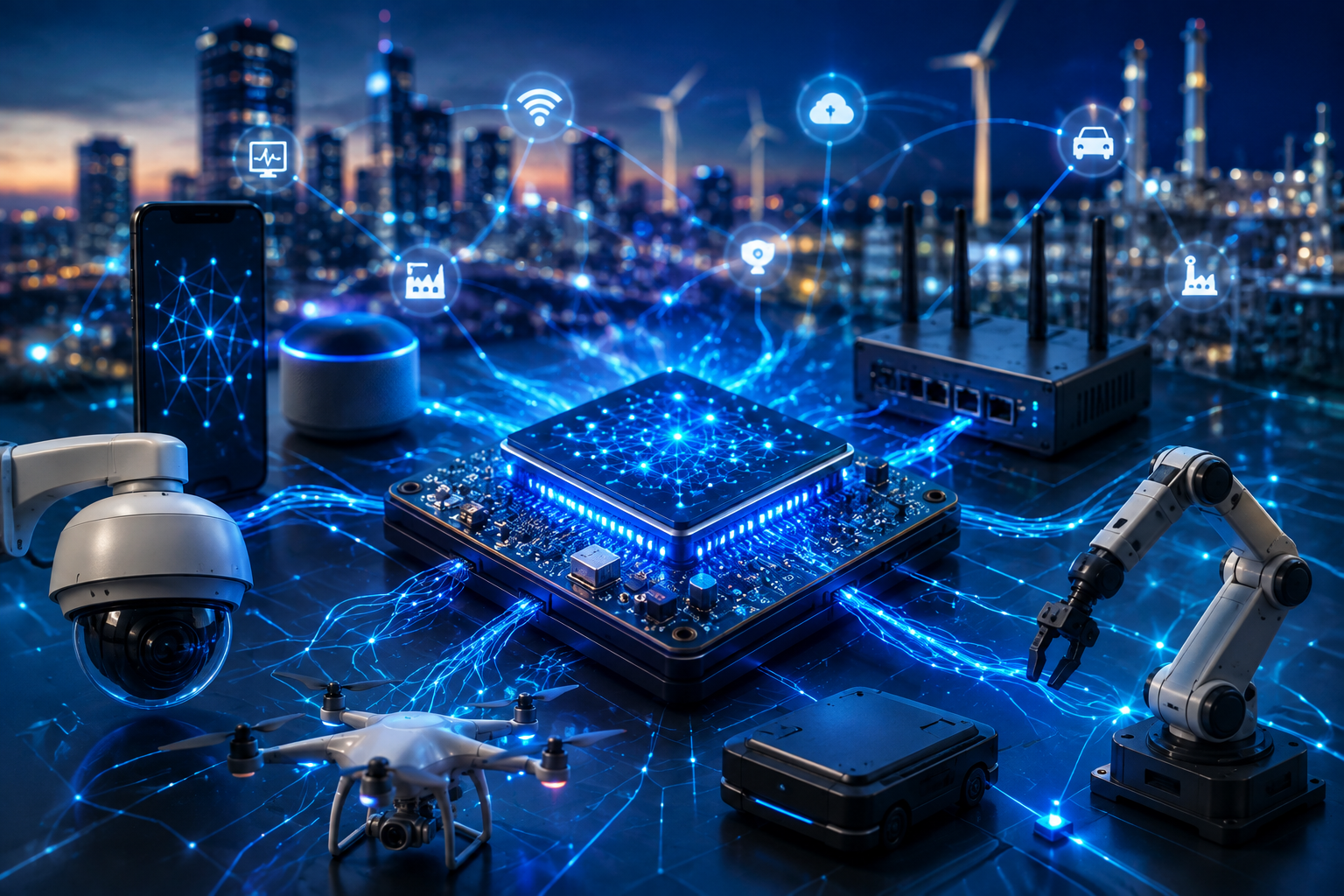
Edge computing involves processing data closer to the devices or locations where it is generated rather than sending every operation to a distant cloud server.
This approach can be valuable when systems need rapid responses or operate with limited network connectivity.
For example, a factory sensor may detect an unusual machine condition and trigger a local alert without waiting for information to travel to a remote data center.
Connected vehicles, industrial equipment, security systems, and smart city infrastructure may also benefit from edge processing.
One major advantage is reduced latency, which can be important for applications requiring fast decisions.
Local processing may also reduce the amount of information transmitted over networks.
However, edge systems can be difficult to manage because computing resources are distributed across many devices and locations.
Security updates, physical protection, device compatibility, and centralized monitoring require careful planning.
Edge computing does not necessarily replace cloud computing. In many cases, the two approaches complement each other, with local devices handling time-sensitive operations while cloud systems support long-term storage and broader analysis.
10. Green Technology and Sustainable Innovation
Environmental concerns are encouraging businesses to explore technology that can improve energy efficiency and reduce waste.
Green technology includes renewable energy systems, energy-efficient electronics, smart grids, electric transportation, and improved methods for recycling materials.
Solar and wind power technologies help generate electricity without directly burning fossil fuels during operation.
Smart energy systems can monitor consumption and help users identify opportunities to reduce unnecessary electricity use.
Manufacturers are also working on more efficient devices, longer-lasting batteries, and improved recycling processes.
Data centers are another important area of development because cloud computing and AI require substantial computing resources.
Technology companies are exploring more efficient hardware, improved cooling systems, and cleaner energy sources to manage the environmental impact of digital infrastructure.
However, technology is not automatically sustainable. Electronic waste, battery materials, manufacturing emissions, and growing energy demand remain significant concerns.
Consumers can support more responsible technology use by repairing devices where practical, recycling electronics through appropriate programs, and avoiding unnecessary replacements.
Sustainable innovation will depend on combining technological improvements with responsible production, consumption, and resource management.
11. How Technology Is Transforming Education
Digital technology has expanded access to educational resources and changed how learning materials are delivered.
Online learning platforms allow students to access courses, recorded lessons, interactive exercises, and digital libraries from different locations.
Video conferencing tools support remote classes, while collaborative applications allow students to work together on assignments.
AI-assisted educational tools can explain concepts, generate practice questions, and help learners identify areas that need additional attention.
Digital simulations can also make complex subjects easier to explore by allowing students to interact with models and virtual environments.
These tools can provide flexibility for learners who cannot attend conventional classes.
However, access to reliable internet, suitable devices, and effective teaching remains essential.
Excessive dependence on digital tools may also reduce opportunities for direct interaction if technology is not balanced with classroom discussion and practical activities.
Educational institutions should evaluate whether new tools improve learning outcomes rather than adopting them simply because they are technologically advanced.
The most effective educational technology combines digital convenience with strong teaching, active participation, and critical thinking.
12. Technology Skills That Matter in the Modern World
As digital tools become more common, technology skills are increasingly valuable across a wide range of occupations.
People do not necessarily need to become software engineers to benefit from technological knowledge. Many roles require practical digital literacy rather than advanced programming expertise.
Important skills include:
- Digital Literacy: Understanding how to use applications, manage files, and evaluate online information.
- Cybersecurity Awareness: Recognizing digital threats and protecting personal or business accounts.
- Data Literacy: Understanding basic charts, statistics, and information-based decisions.
- AI Literacy: Knowing what AI tools can do, where they may fail, and how to verify their outputs.
- Problem-Solving: Using digital resources to investigate problems and evaluate possible solutions.
- Adaptability: Learning new applications and adjusting to changing digital workflows.
- Communication: Collaborating effectively through digital platforms and remote working tools.
Professionals can develop these abilities through structured courses, hands-on projects, practical experimentation, and workplace training.
Building technology skills can help people adapt to changing job requirements and identify opportunities in emerging industries.
13. Challenges Facing the Technology Industry
Although technology creates new opportunities, the industry must address several significant challenges.
Data Privacy
Digital services collect information about user behavior, preferences, locations, and activities.
Organizations should collect only necessary information, protect it appropriately, and communicate their data practices clearly.
Users should review privacy settings and understand how applications handle their information.
Digital Inequality
Not everyone has equal access to reliable internet, modern devices, or digital education.
This divide can affect access to employment opportunities, educational resources, healthcare information, and public services.
Affordable connectivity and digital literacy programs can help reduce these barriers.
Electronic Waste
Frequent device replacement contributes to electronic waste and increases demand for raw materials.
Longer product lifecycles, repairability, and responsible recycling can help reduce these environmental pressures.
Rapid Technological Change
New products and platforms can become outdated quickly.
Businesses must balance innovation with practical needs, ensuring that technology investments provide measurable value.
Ethical Concerns
Automated systems can influence hiring, financial decisions, information access, and public services.
Developers and organizations must consider fairness, accountability, transparency, and the consequences of system failures.
Addressing these issues is necessary to ensure that technological progress benefits society broadly.
14. What the Future of Technology May Look Like
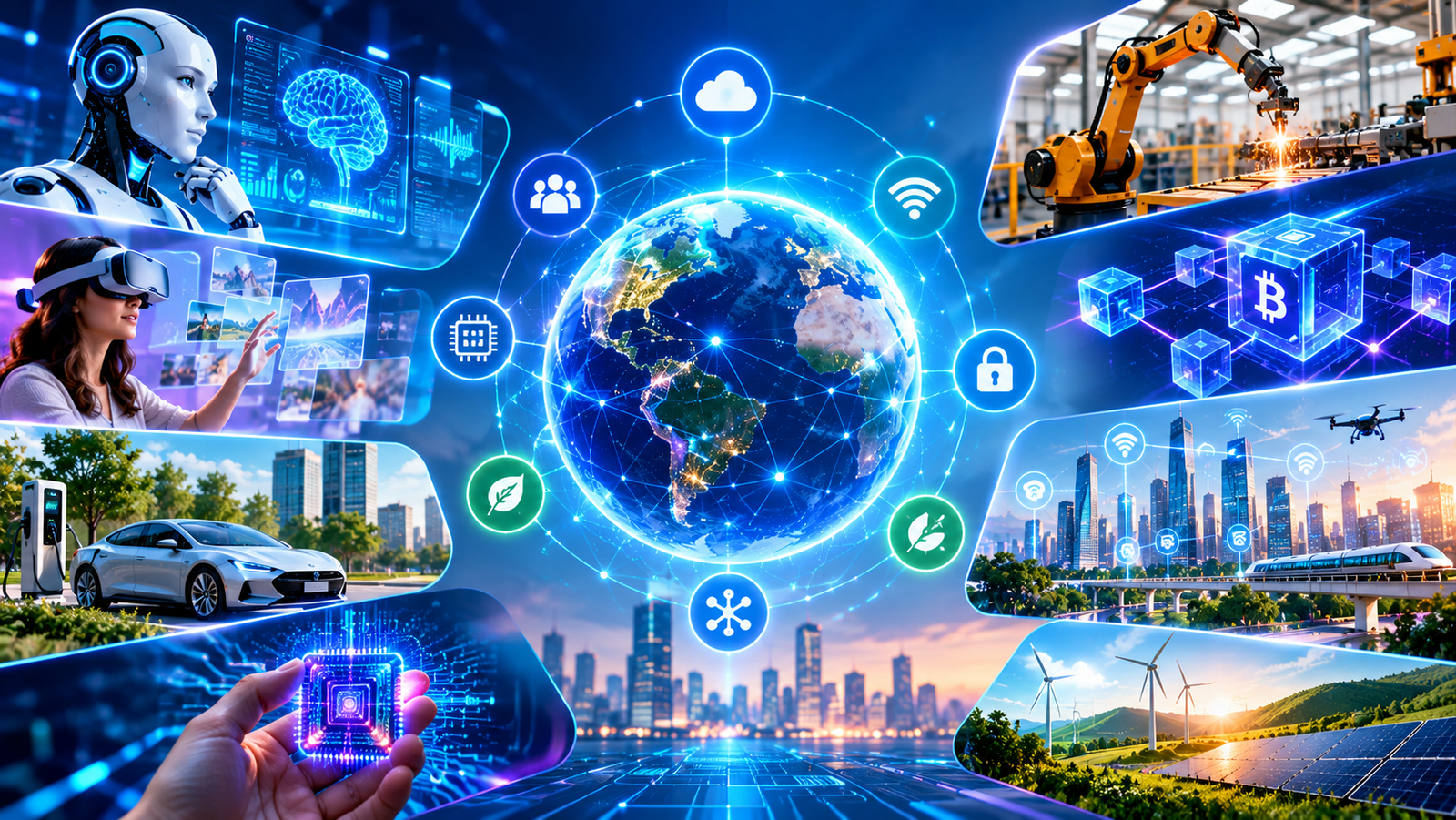
The future of technology will likely involve greater integration between AI, connected devices, robotics, cloud platforms, and advanced computing systems.
Digital applications may become more capable of understanding user requirements and coordinating tasks across multiple services.
Smart homes could manage household systems more efficiently. Businesses may automate additional administrative processes. Healthcare researchers may use advanced computing tools to analyze complex datasets.
Manufacturing facilities may combine robotics, predictive maintenance, and real-time monitoring to improve production efficiency.
At the same time, cybersecurity and privacy protection will become even more important as more systems share information and operate automatically.
Emerging computing technologies may also create new opportunities, although the practical impact and adoption timelines of some developments remain uncertain.
Technology will not progress uniformly across all industries. Cost, regulation, infrastructure, technical limitations, and user acceptance will influence which innovations become widely adopted.
The most meaningful developments will be those that solve real problems, improve people’s lives, and deliver reliable results.
Conclusion
Technology continues to reshape the modern world by changing how people communicate, learn, travel, work, and manage everyday activities.
Artificial intelligence, cloud computing, cybersecurity, robotics, wearable devices, electric transportation, and sustainable innovation are among the major developments influencing the digital landscape.
These technologies can improve productivity, expand access to information, support new services, and create opportunities across industries. However, they also introduce challenges involving privacy, security, environmental impact, accessibility, and responsible automation.
Individuals and businesses can benefit from technology by understanding their requirements, evaluating available solutions, protecting sensitive information, and developing relevant digital skills.
Rather than adopting every new product or trend, users should focus on innovations that provide practical value and address genuine needs.
As technology continues to evolve, the ability to learn, adapt, and make informed decisions will remain essential. The future of the digital world will depend not only on what technology can accomplish but also on how thoughtfully people choose to use it.