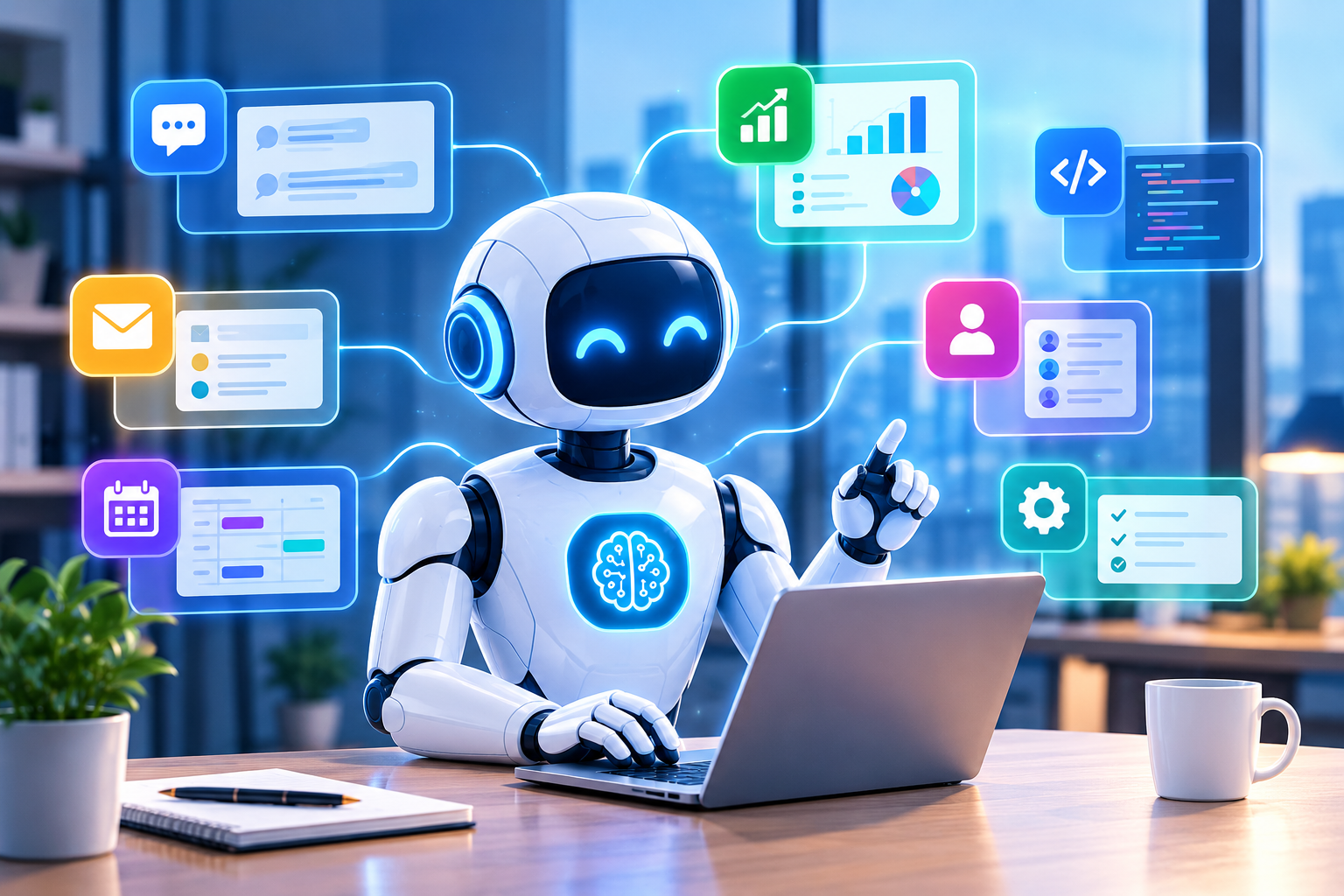
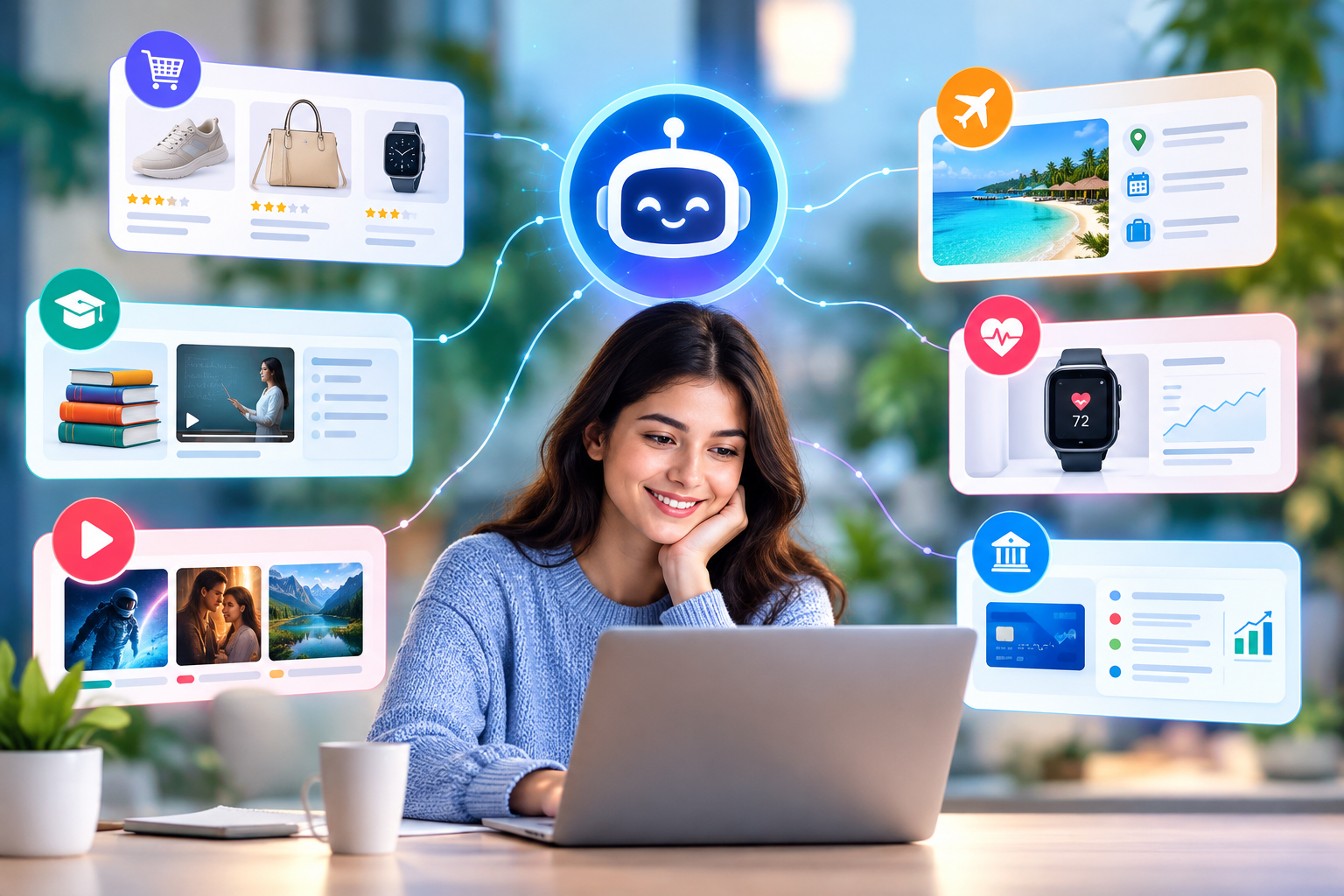
Artificial intelligence (AI) is transforming the way people interact with technology, businesses, and digital services. From intelligent shopping recommendations to personalized learning platforms, AI is helping organizations understand individual preferences and deliver experiences that feel more relevant, convenient, and useful. While many discussions about AI focus on chatbots, automation, and content generation, another important development deserves attention: the growing role of AI in creating personalized digital experiences.
Personalization is no longer limited to displaying a customer’s name in an email or recommending products based on previous purchases. Modern AI systems can analyze patterns, interpret user behavior, predict preferences, and adapt digital experiences according to changing needs. These capabilities are influencing industries such as education, entertainment, healthcare, retail, travel, and financial services.
However, AI-powered personalization also raises important questions about privacy, transparency, fairness, and the balance between convenience and human control. Understanding how this technology works, where it delivers value, and what challenges it creates can help individuals and businesses make better decisions about adopting AI.
What Is AI-Powered Personalization?
AI-powered personalization refers to the use of artificial intelligence technologies to tailor digital content, recommendations, services, and interactions to individual users.
Traditional personalization often relies on predefined rules. For example, an online store might recommend winter jackets to customers living in colder regions. Although this approach can be useful, it may not account for differences in personal preferences, shopping habits, budgets, or changing circumstances.
AI-based systems can examine larger and more complex collections of information to identify patterns that conventional rule-based systems might miss.
Consider a music streaming platform. Instead of recommending songs only because they belong to a user’s favorite genre, an AI system might consider listening history, skipped tracks, preferred tempos, time of day, and similarities between songs enjoyed by other listeners.
The system can then generate recommendations that become more relevant as it learns from additional interactions.
AI-powered personalization can involve several technologies, including:
- Machine learning: Identifies patterns in data and uses them to make predictions.
- Natural language processing: Helps systems interpret and respond to human language.
- Generative AI: Creates customized text, images, explanations, and other digital content.
- Recommendation algorithms: Suggest products, services, entertainment, or information based on relevant signals.
- Predictive analytics: Estimates future needs or likely outcomes using historical and current data.
These technologies can work together to create experiences that adapt to different users rather than offering everyone the same content.
1. How AI Understands Individual Preferences
One of the most important capabilities behind AI-powered personalization is its ability to identify patterns in user behavior.
People communicate their preferences through many everyday actions. They click certain links, spend time reading particular articles, purchase specific products, save videos, complete lessons, and return to services that meet their expectations.
When collected and processed responsibly, these interactions can help AI systems estimate what a person might find useful.
For example, a digital learning platform may observe that a student understands visual explanations more quickly than lengthy written descriptions. It could recommend diagrams, interactive exercises, or short videos when teaching similar concepts.
An e-commerce platform might recognize that a customer frequently compares product specifications before making a purchase. Instead of showing only promotional offers, it could prioritize comparison charts, detailed descriptions, and independent product information.
The goal is not simply to collect more data. It is to identify meaningful signals that improve the experience.
Nevertheless, predictions are not always accurate. A person may browse a product without intending to purchase it, or their interests may change over time. Effective personalization systems should therefore allow users to correct preferences and should avoid treating predictions as unquestionable facts.
2. AI Is Changing the Online Shopping Experience
Online shopping has traditionally required customers to search through categories, apply filters, compare prices, and read product descriptions before finding suitable options.
AI is making this process more adaptive.
Modern shopping platforms can use recommendation systems to identify products that match a customer’s preferences, budget, and browsing behavior. Some systems also support natural-language searches, allowing shoppers to describe what they need in ordinary language.
For example, a customer might search for a lightweight laptop for remote work, video meetings, and occasional travel.
An AI-assisted shopping experience could interpret these requirements and prioritize battery life, portability, webcam quality, memory, and price instead of simply returning laptops containing the words used in the search.
Generative AI can also help shoppers understand technical specifications. Someone unfamiliar with computer processors might receive a simplified explanation of how different processor categories affect everyday performance.
Retailers can benefit from these capabilities through more relevant product discovery, improved customer support, and potentially fewer abandoned shopping sessions.
However, personalization must remain transparent. Recommendations should not automatically be treated as objective rankings because commercial arrangements, advertising, and business priorities may influence which products appear.
Customers should have access to clear product information and meaningful opportunities to compare alternatives.
3. Personalized Learning Through Artificial Intelligence
Education is another area where AI-powered personalization has considerable potential.
Traditional classrooms often require teachers to deliver lessons to groups of students who learn at different speeds. Some students understand a topic immediately, while others need additional explanations, practice questions, or alternative examples.
AI-assisted learning platforms can help address these differences.
A learning system may identify concepts that a student repeatedly struggles with and provide additional exercises targeting those specific areas. Students who demonstrate strong understanding can move toward more advanced material.
For example, someone learning mathematics might receive step-by-step guidance when solving algebraic equations. If the learner repeatedly makes mistakes when rearranging equations, the platform can offer additional practice on that skill before introducing a more complicated topic.
Generative AI tutors can also explain difficult concepts in different ways. A student who does not understand a formal scientific explanation might request a simpler description or an everyday example.
These tools can support:
- Adaptive quizzes that respond to a learner’s performance.
- Personalized study schedules.
- Language learning through interactive conversations.
- Instant explanations of difficult concepts.
- Customized revision materials.
- Accessibility features for learners with different needs.
AI does not replace the importance of qualified teachers. Human educators provide encouragement, classroom management, social interaction, and professional judgment that automated systems cannot reliably reproduce.
The most useful approach combines AI-assisted practice with human instruction and appropriate oversight.
Schools and educational technology providers must also consider student privacy, age-appropriate safeguards, accuracy, and equal access to digital learning resources.
4. How AI Personalizes Entertainment
Entertainment platforms have helped make recommendation algorithms part of everyday life.
Streaming services, music applications, video platforms, and digital gaming environments use various forms of personalization to help people discover content that matches their interests.
Without recommendation systems, users might need to browse thousands of available options manually. AI can narrow those choices by estimating which movies, songs, games, or videos are likely to be relevant.
Personalization can go beyond previous viewing history.
A streaming service might consider whether someone typically watches short videos or longer programs, while a music application may identify patterns in listening habits. A gaming platform could recommend challenges based on a player’s demonstrated skill level.
Generative AI is also creating opportunities for more interactive entertainment. Developers can use AI tools to support adaptive storytelling, conversational characters, customized game environments, and dynamic content.
For example, an educational adventure game might adjust the difficulty of its puzzles according to a player’s progress. A beginner receives additional hints, while an experienced player encounters more challenging tasks.
These features can make digital entertainment feel more responsive.
However, personalization can also narrow people’s exposure to unfamiliar content. If a system continually recommends similar material, users may miss interesting alternatives.
Offering diverse recommendations alongside familiar favorites can help maintain a healthier balance between personalization and discovery.
5. AI in Healthcare: More Relevant Information and Support
Healthcare is an area where personalization may offer significant benefits, although it requires particularly careful implementation.
AI systems can help healthcare professionals organize information, identify patterns, and support certain administrative or clinical workflows. Depending on the system and its validation, AI may also assist with analyzing medical images, monitoring health-related measurements, and identifying patients who could benefit from additional attention.
Personalized digital health services can use relevant information to provide reminders, explain general health information, or encourage people to follow care plans established with their healthcare professionals.
For instance, a patient using a medication reminder application may receive notifications based on a schedule entered by the patient or clinician. A digital wellness platform might adapt educational material to a user’s stated goals.
More advanced systems may assist clinicians in reviewing large amounts of patient information, but their usefulness depends on data quality, clinical validation, and appropriate professional oversight.
There are important limits to what AI should do.
An automated recommendation is not a substitute for a medical diagnosis, and generated health information can be incomplete or incorrect. Healthcare decisions should be made with appropriately qualified professionals, particularly when symptoms are serious or treatment choices carry significant risks.
Privacy is equally important because health information is highly sensitive. Organizations must use appropriate security measures, restrict unnecessary data access, and comply with applicable privacy and healthcare requirements.
The long-term opportunity lies in using AI to support better-informed care without removing human responsibility from important medical decisions.
6. Personalized Travel Planning With AI
Travel planning involves numerous decisions, including destinations, transportation, accommodation, activities, budgets, and schedules.
AI-powered tools can simplify this process by organizing information around a traveler’s stated preferences.
For example, someone planning a five-day holiday might explain that they enjoy nature, prefer moderate spending, want limited travel between attractions, and need activities suitable for children.
An AI travel assistant could use these preferences to suggest a draft itinerary, organize destinations by location, and identify practical considerations.
Other potential applications include:
- Destination recommendations based on interests.
- Customized sightseeing itineraries.
- Travel suggestions that account for budget constraints.
- Language assistance for international visitors.
- Automated customer support for travel providers.
- Recommendations for activities based on trip duration.
- Assistance comparing transport and accommodation options.
These tools can save time during the early stages of planning.
Nevertheless, AI-generated itineraries require verification. Opening hours, transportation schedules, visa rules, weather conditions, and booking availability can change. Travelers should confirm important details with official sources or service providers before making decisions.
Travel personalization should also respect privacy. A system does not need unlimited access to a person’s location history or personal records to recommend a useful holiday.
A clear explanation of which preferences are being used can make these services more trustworthy.
7. The Role of Generative AI in Personalized Content
Generative AI is expanding personalization beyond selecting existing information.
Traditional recommendation systems primarily choose which content to display. Generative systems can also create or modify content to suit a particular purpose.
Businesses can use these capabilities to draft customized product explanations, prepare different versions of educational materials, generate customer support responses, and adapt marketing messages for different audiences.
For example, a software company might explain the same product differently to several groups.
A beginner could receive a simple introduction, while an experienced developer might prefer technical documentation. A business manager may need information about costs, security, and operational benefits.
Generative AI can help produce these variations more efficiently.
Content creators can also use AI to develop outlines, identify possible article topics, simplify complex explanations, and adapt information for different reading levels.
However, personalization should not come at the expense of accuracy or authenticity.
AI-generated material can contain factual errors, outdated information, or misleading claims. Human review remains important, particularly for financial, medical, legal, and other high-impact subjects.
Businesses should also avoid using personalization to manipulate people through misleading claims, fabricated urgency, or messages that exploit individual vulnerabilities.
Responsible personalization helps users make informed decisions rather than pressuring them into actions they might not otherwise choose.
8. Benefits of AI-Powered Personalization for Businesses
For organizations, AI-powered personalization can improve how products and services respond to customer needs.
When implemented effectively, it can provide several benefits.
Improved customer experience
Relevant recommendations and customized information can reduce the effort required to find useful products or services.
More efficient customer support
AI assistants can answer routine questions, direct customers to relevant resources, and help support teams manage repetitive requests.
Better product discovery
Recommendation systems can help customers discover suitable products from large catalogs.
More relevant communication
Businesses can organize messages around customer preferences and interests instead of sending identical communications to everyone.
Operational insights
AI can identify patterns in customer feedback and interactions, helping organizations understand common problems and opportunities for improvement.
Potential improvements in retention
Customers may be more likely to return when a service consistently provides useful experiences. However, retention depends on many factors, including product quality, pricing, reliability, and customer service.
Businesses should measure whether personalization genuinely improves outcomes instead of assuming that more AI automatically produces better results.
Useful measurements may include customer satisfaction, task completion, recommendation relevance, complaint rates, conversion rates, and the frequency of incorrect recommendations.
9. Privacy and Ethical Challenges
Despite its advantages, AI-powered personalization introduces significant challenges.
The most important concern is the collection and use of personal information.
A system may rely on browsing history, purchase records, location data, stated preferences, or interaction patterns. When this information is collected without sufficient transparency, users may feel that their activities are being monitored too closely.
Organizations should follow several responsible practices.
Collect only necessary information. Personalization systems should avoid gathering data that is unrelated to their stated purpose.
Explain how information is used. Users should receive clear explanations of data collection, personalization, and relevant sharing practices.
Protect stored data. Appropriate security controls can reduce the risk of unauthorized access or disclosure.
Provide meaningful controls. Where practical, users should be able to change preferences, disable certain personalization features, or manage relevant data.
Evaluate fairness. Systems should be tested for patterns that unfairly disadvantage particular groups.
Maintain accountability. Organizations must establish who is responsible for monitoring AI systems and correcting harmful outcomes.
Another challenge is the creation of feedback loops. If an AI system repeatedly shows users only the content it predicts they will prefer, its recommendations may gradually reinforce narrow interests or existing biases.
Businesses can address this problem by including diverse recommendations, reviewing outcomes, and allowing users to explore content beyond their predicted preferences.
Trust should be treated as a fundamental requirement rather than an optional feature.
10. The Difference Between Helpful Personalization and Excessive Automation
Personalization works best when it supports human decisions instead of controlling them.
A shopping assistant that compares products according to a customer’s budget can be useful. A system that hides alternatives because they do not match a commercial objective is less trustworthy.
Similarly, an educational platform that identifies learning gaps can support students. A system that permanently labels a student as weak in a particular subject could create unnecessary limitations.
The distinction lies in how AI recommendations are presented and used.
Helpful personalization offers relevant information while preserving the user’s ability to make choices. Excessive automation can make decisions difficult to challenge or encourage people to accept predictions without examining them.
Organizations should therefore design AI experiences around human control.
Users should understand when AI is making recommendations, have reasonable opportunities to correct inaccurate assumptions, and retain access to alternatives whenever appropriate.
Human review is especially important when automated decisions could affect employment, education, financial opportunities, healthcare, or access to essential services.
AI should help people evaluate possibilities, not silently determine what possibilities they are allowed to see.
11. Skills Needed to Work With AI Personalization
As AI-powered services become more common, professionals from different backgrounds may benefit from understanding how personalization systems work.
Technical roles can include machine learning engineering, data science, AI product development, software engineering, and data engineering.
However, not every career in this field requires advanced programming.
Businesses also need professionals who understand customer behavior, user experience design, digital marketing, privacy, quality assurance, and responsible technology implementation.
Some useful skills include:
- Data interpretation and analytical thinking.
- Understanding basic machine learning concepts.
- Familiarity with generative AI tools.
- Knowledge of user experience principles.
- Critical evaluation of AI-generated information.
- Awareness of privacy and security requirements.
- Clear communication and problem-solving.
- Ability to measure the effectiveness of digital products.
Students and professionals can begin by exploring introductory AI courses, experimenting with educational tools, and learning how recommendation systems affect everyday applications.
Practical projects can be especially valuable. For example, a beginner might create a simple book recommendation prototype using a small, non-sensitive dataset.
The objective should be to understand how recommendations are generated, how their quality is evaluated, and where they may fail.
Technical knowledge becomes more valuable when combined with sound judgment and an understanding of human needs.
12. What the Future of AI-Powered Personalization May Look Like
AI personalization is likely to evolve as models, computing systems, and digital products become more capable.
One possible development is the expansion of AI assistants that coordinate multiple tasks across different applications. With appropriate permissions, such systems might help users compare options, organize information, and complete routine activities based on their stated goals.
Another possibility is more adaptive software that adjusts its interface, explanations, and support according to a user’s experience level.
Businesses may also explore privacy-preserving techniques that reduce the amount of personal information shared during processing. Approaches such as on-device processing and federated learning can support certain forms of personalization while limiting some data transfers, although their suitability depends on the application.
Multimodal AI could further improve interactions by processing combinations of text, images, audio, and other inputs. This may make digital services more accessible to people who prefer speaking, viewing demonstrations, or interacting through visual interfaces.
At the same time, regulation, security requirements, and public expectations will influence how these systems develop.
The future will not depend only on making AI more powerful. It will also depend on making it more reliable, transparent, secure, and respectful of individual choice.
Organizations that focus exclusively on technical capabilities may overlook the importance of trust. Those that combine useful personalization with responsible design may be better positioned to create lasting value.
Conclusion
AI-powered personalization represents an important development in the relationship between people and technology. By analyzing patterns, predicting preferences, and adapting digital interactions, artificial intelligence can help make shopping, education, entertainment, travel, and other services more relevant and convenient.
Its greatest value comes from solving genuine problems. Personalized recommendations can reduce information overload, adaptive learning tools can provide additional practice, and intelligent assistants can simplify complex tasks.
However, these advantages must be balanced against concerns about privacy, bias, inaccurate predictions, and excessive automation. Personal information should be handled responsibly, AI-generated recommendations should be evaluated critically, and users should retain meaningful control over their experiences.
Businesses should approach personalization as a way to serve customers better rather than simply as a method of increasing engagement or collecting more data.
Ultimately, successful AI personalization will not be measured only by how accurately a system predicts someone’s next action. It will also be measured by whether the technology helps people make better decisions, discover useful opportunities, and interact with digital services confidently.
As artificial intelligence continues to evolve, the most successful systems are likely to be those that combine intelligent automation with transparency, human judgment, and respect for individual preferences.